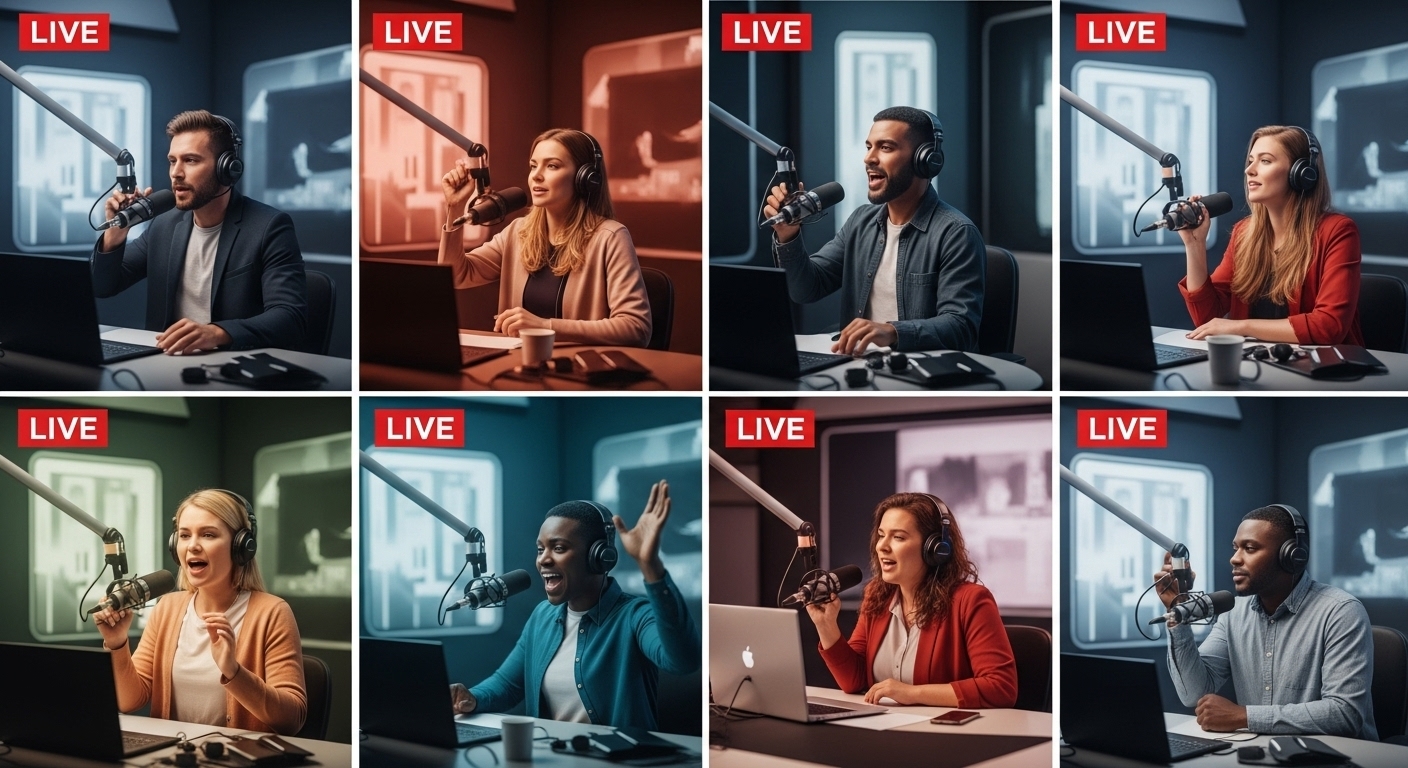
I had lunch this week with a fellow life-long radio guy whose been in the business even longer than I have. He actually competed with my father in DFW radio back in the ‘70s. As we swapped stories about the good old days and our thoughts on the latest devastating round of layoffs at iHeart, he posed an interesting question. Could a fully staffed station, with on-air talent 24/7, still dominate a market? I believe the answer to that question is yes, but all the stars would have to align. Here's how it could work.
Groups don’t run with less live and local on-air talent because they think stations sound better as jukeboxes. They do it because they’re not generating enough revenue to pay for live and local talent. But, when everyone else is pre-recorded or syndicated in most, if not all, dayparts being live would give a station a huge advantage over all of the competition. However, there’s zero room for error. All of the talent would have to add value, know how to properly prepare for a content-driven shift, know how to tease, be willing and capable of engaging and interacting with the audience, skilled at creating multi-platform content daily (including video content, podcasts and blogs), open to fully embracing AI tools, great on-site at events, community oriented, very advertiser friendly and comfortable following a strategic gameplan and being regularly airchecked. To make the numbers work they’d also have to be willing to let the group get creative with the compensation, especially in the beginning, and take lower base salaries in exchange for performance bonuses, generous talent fees and partial ownership of some of the digital content (like audio/video podcasts and livestreams).
Because of that small margin of error, everything else would also have to be on-point. A format capable of being #1 in a market, music selection that’s based off market level data on music stations, studios built to maximize content, strategic imaging, shorter stopsets, creative production, promotions that check all the right boxes and a solid sales team and strategy to underwrite everything. Plus, top-down leadership that’s good at articulating goals, core values and KPIs.
The other big question is this. Are any radio groups still willing to try it? It’s unlikely any of the major radio groups will. Although many think the massive groups like iHeart are just laying off people in droves because they’re cold, heartless organizations that only care about protecting their own paychecks. The reality is they’re all saddled with debt that’s becoming impossible to restructure and manage. So, they’re all just trying to buy as much time as possible before the inevitable happens and they sell off their assets at pennies on the dollar to someone in a better position to operate them. Because of that, there’s very little chance any of them will reverse trend and fully staff a station at this point. But, the new, smaller, independent groups that scoop up those stations certainly could.
A station that wants to go this route but can’t make the numbers work initially could phase into it by adding one good live and local talent at a time. Then supplement that by hiring talent with home studios who are willing to go live from across the country to create some multi-location shows and the ability to do crossover breaks between shows. Another good solution is to pair experienced radio talent that are great on-air with up and comers who are strong on the digital side.
What do you think? Are fully staffed stations still an option and how would you do it? Comment below or email me at Andy@RadioStationConsultant.com.
Pic AI generated using Envato Elements.