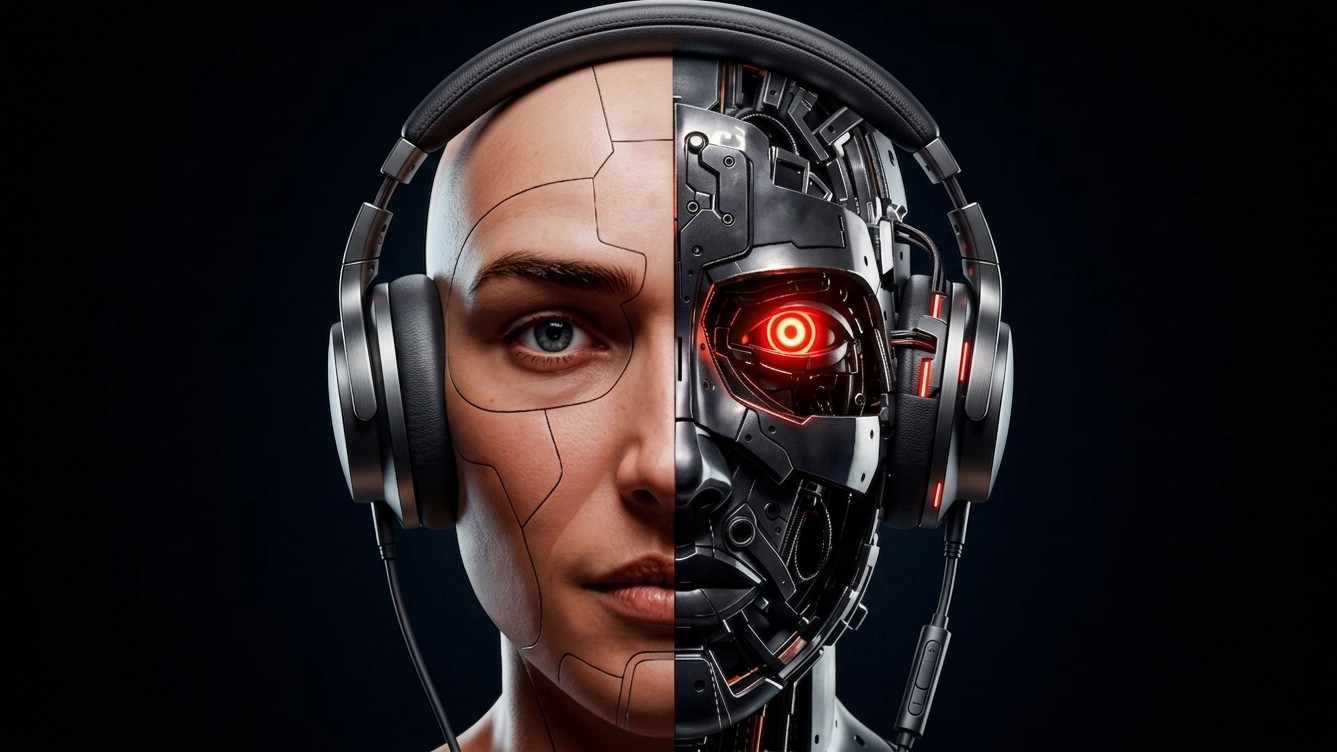
There’s currently a groundswell of backlash around AI happening here in the US, and around the world, that’s getting too big to ignore. Every week there’s a new story about a leading AI company’s model getting out of its cage and doing something it shouldn’t. Those incidents are compelling industry insiders and experts to warn about the real possibility of doomsday scenarios like the ones we all grew up watching movies about. Here in my home state of Texas the pushback on data centers is so powerful it’s even bringing people from bitterly divided political parties together. Since data centers are one of the only physical things related to AI to complain about, they are catching heat for more than just the noise pollution and the resources they consume. So, how should radio respond to this current AI backlash? Here’s what I think.
Despite the backlash, I still believe radio is one industry that will be helped more by AI than hurt by it. Because of our already limited staffs, many of whom are overworked and underpaid, radio has no choice but to use AI to pair with our personnel. Not doing so puts us at a massive disadvantage to anyone that does. I spent the pandemic teaching myself to edit video because I knew how valuable that skill would be in radio in the coming years. Because of that, I can edit any multi-cam hour-long video into 20 short clips for social media and tailor them all to work well on different social platforms and devices, but the process takes me several hours. AI can do the same thing but produce 40 clips and help schedule them all as well and tell me which ones are likely to work the best, within a matter of minutes. It can also comb the entire internet and then serve any on-air talent only the specific stories their audience is likely to find interesting in those same couple of minutes. That’s just two small examples. AI can already help with virtually every aspect of every single job in radio, including my own. There’s zero chance I could consult the number of radio stations I’m consulting effectively if I didn’t utilize multiple AI tools daily.
AI voices, however, are a different story. There’s nothing wrong with radio using AI voices for a whole host of tasks. However, putting them on the air and pretending they are real people opens radio stations up to the growing public outcry about AI, specifically AI slop. Plus, countries and states will almost certainly continue to pass laws requiring broadcasters and platforms to identify when something has been created by artificial intelligence. Many already have. Radio would be smart to get ahead of that by denoting when and how AI voices are used on the air. However, there are ways to do that without making it boring and disclaimer-like.
We also have to understand that the rules around AI could change at any minute. We can’t get too married to any one AI tool because a single law could render it virtually useless. Plus, new AI tools are popping up faster than any of us can keep up with. Some will survive and many will not. So, it’s important to be flexible and not put all our eggs in one AI basket. Luckily learning AI tools gets exponentially easier with each one with learn.
We should expect the costs to go up though. As impressive as many AI tools have become already, right now we are still essentially in the beta (testing) phase of AI. The companies that make the backbone of artificial intelligence are essentially using all of us as test subjects to see how end users plan to use the technology so they can come up with the best ways to make money off of that usage. The amount of computing power it takes to do even simple tasks in no way correlates with the costs we’re currently paying. At some point, probably not in the distant future, prices will increase pretty dramatically. Some of that will be offset by advancements in tech, like quantum computing, but not all of it.
What do you think? What are some other ways radio should respond to the AI backlash? Comment below or email me at Andy@RadioStationConsultant.com.
Pic AI generated using Gemini.