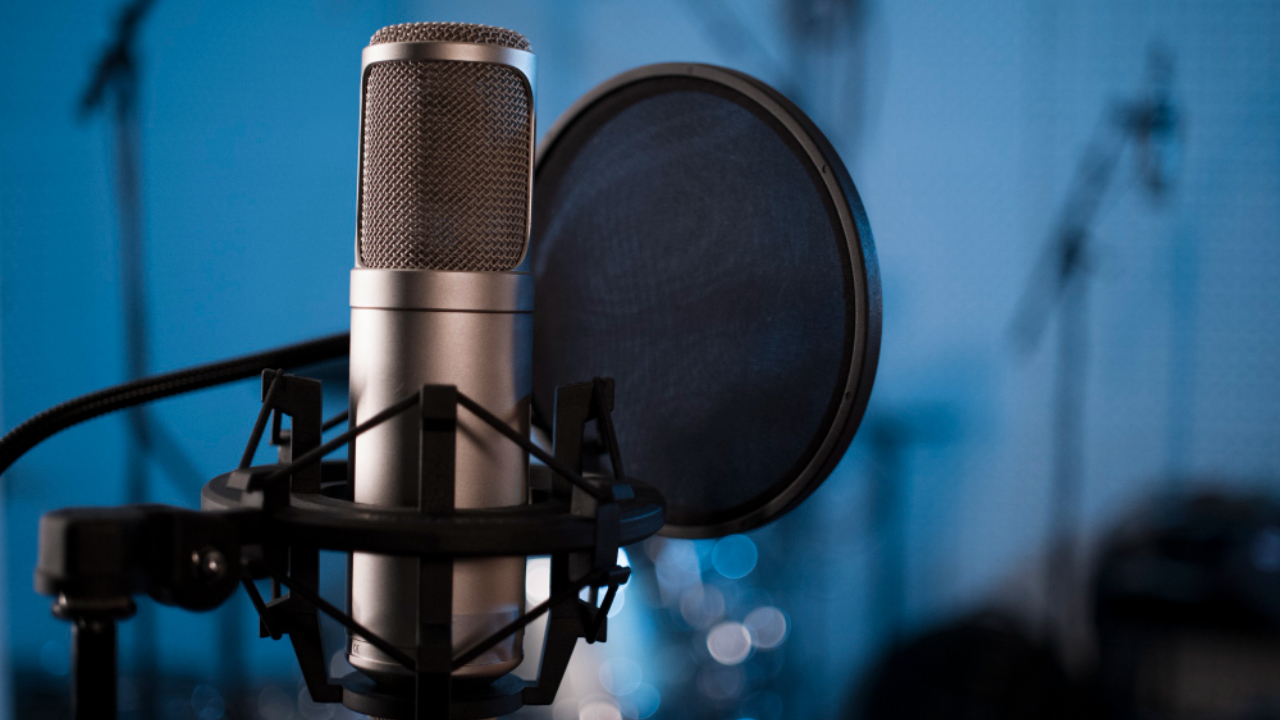
As a lifelong radio guy, and gear nerd, I’m always on the lookout for a mic upgrade. So anytime I’m at a convention I test out every mic I can, when I’m visiting a client’s station and I see a new mic I check it out and when I’m on someone’s podcast and notice how good they sound I ask about their setup. Because of all of that I’ve got a lot more information on microphones than anyone wants to hear, certainly my wife. So, I thought I would do a follow up to our Ranked: Best Studio Mic article to talk about another group of mics that can come in handy for cost-conscious radio broadcasters (is there any other kind?) Here are some of my thoughts on the best clone mics and what one of my friends had to say about them. Weigh in with your thoughts in the comments, then we’ll narrow this down into a poll in our Radio Update Weekly Wire to settle the debate.
For every album I’ve put out I recorded my vocals on either a Neumann U47 or U87. Both of which I’ve also used for voicework. Specifically for radio broadcasting my favorite mic is the one Howard Stern uses, and hardly anyone else because of the price, the Neumann TLM 103. Using those $1,200 to $15,000 microphones spoiled me into thinking that was my best and only option to get that level of sound quality out of both my vocals and spoken voicework. However, in recent years many great (and some not so great) clone mics have been produced by various companies that offer something close to that famous Neumann sound without the hefty price tag that puts it out of most radio broadcasters’ range. A few I’ve personally used and tested include Telefunken (my favorite but also the most expensive), Warm Audio, Dachman, Roswell and Lauten Audio. Another one I’ve seen recently, but not yet tested, that’s even more affordable is Icon Pro Audio.
My friend Calvin Jordan, Global Operations and Sourcing Director for DNAV North America, also has a ton of experience using clone mics so I asked him to weigh in on his favorite. He recommended folks check out 3audio, an Australian company that makes clones of classic condenser mics. Their Warbler MKI is a Neuman U87 clone and the MKII is their version of the U47. For warm and bright sounds like the vintage C12 Calvin suggested the Warbler MKIII, Warbler MKIIID and GZ12fet. If warm and airy like the ELAM251 is more of what you’re looking for, he recommended the Warbler MKIV, MKIVD and GZ251fet. Calvin added, “I think all of these could be applicable to fantastic voiceover work, and depending on the station, could be excellent for an NPR-like clean sound.”
When we did our Ranked: Best Studio Mic article back in 2024 our readers unanimously voted the Electrovoice RE20 as the best overall studio mic for radio followed closely by the Shure SM7b. Which wasn’t surprising being that I’ve seen those mics in 90% percent of the radio studios I’ve been in throughout my career. Part of the reason radio loves those mics is because they tend to work well universally across all different types of male and female voices. I lean toward the Shure a little myself because it’s $50 cheaper, looks better on camera and doubles as a good vocal mic for singing. But the main reason radio broadcasters keep using those two mics is their quality and consistency at that price point. I don’t know anyone who would argue that they’re better than a Neumann. Because their less expensive already, there aren’t a lot of clone mics trying to cut into the RE20 and SM7b market share. The only one I know of is Universal Audio’s modeling mic that’s only a tad cheaper but adds some versatility because it allows you to get the sound of multiple mics in one (including both of those). There are a few other affordable alternatives that we can go over in a future article. I’m going to leave those out here because they’re not technically clone mics.
What do you think? Comment below with your favorite clone mic or email me at Andy@RadioStationConsultant.com.
Pic designed by Freepik.com.