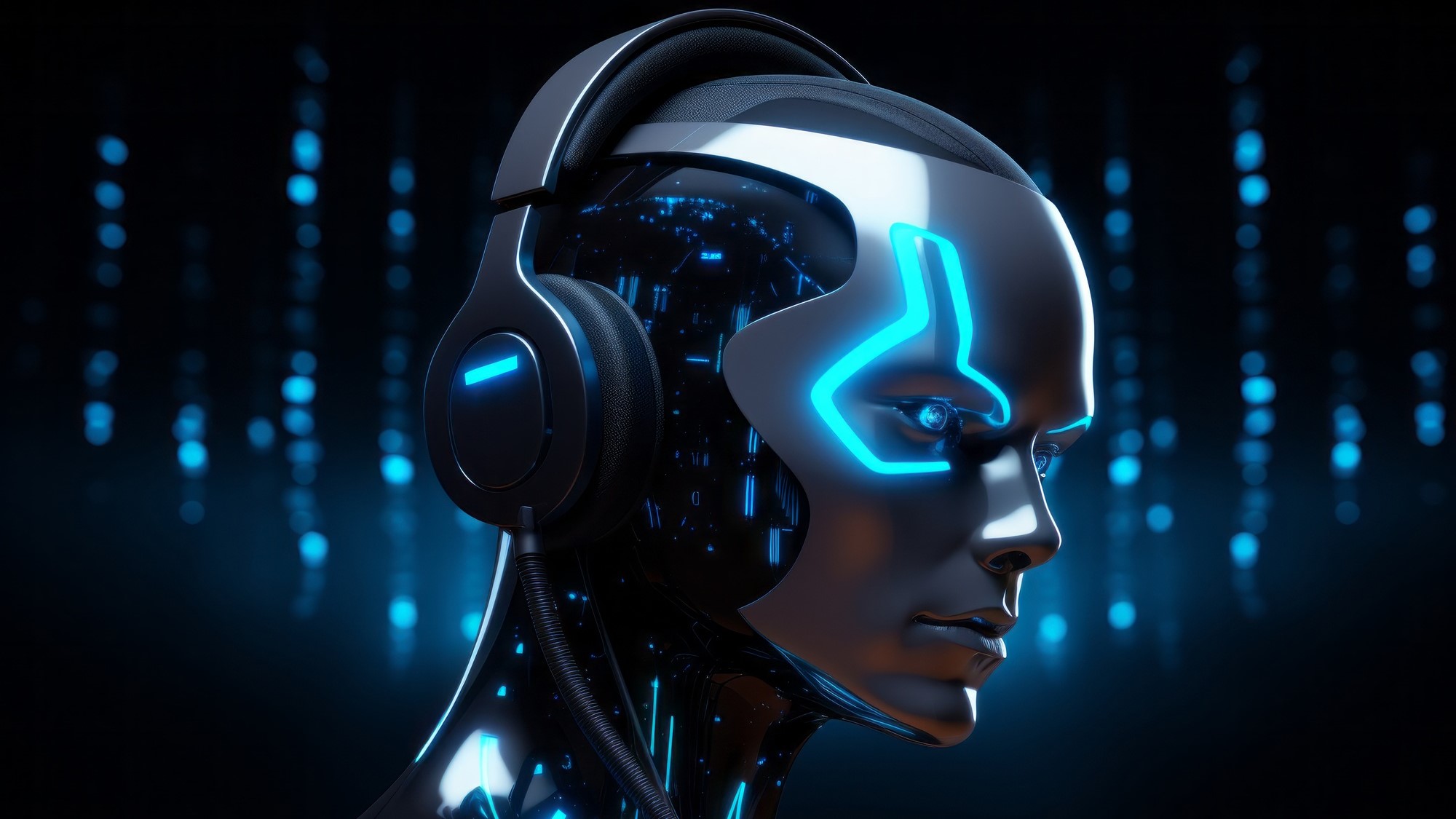
If you’re a regular reader of my blogs you know that I’m a huge proponent of live and local radio. Because, as someone who’s been in radio for a long time, I understand that for radio to thrive at the local level it has to have a presence at the local level and that requires staff. Yet with each passing year we all know that there are less people locally employed in radio than the year prior. That was happening even before AI entered the picture. Now, within our industry two things are converging, the implementation of AI and significantly lower personnel budgets. Because of that I thought it would be good to envision what a future where AI completely ran a radio station would look like. So, here’s how that would work along with the pros and cons of doing it.
With the right prompts AI could easily write station imaging and since AI is already being used to edit video it could certainly be used to edit and produce station imaging and commercials as well. AI’s also likely not far away from completely doing music logs. Pros: beyond cost savings, it could be programmed to look at every bit of available music data. Like what similar stations are playing, how each individual song is doing minute by minute on all streaming and on-demand platforms and it could even incorporate real-time data from listener tune-outs and interactive feedback. This would allow it to make completely unbiased decisions on what the audience is most likely to want to hear, how often and when. Cons: the station would no doubt lose some of it’s heart and emotion that only a human behind the controls can infuse. Traffic logs being done by AI would have a similar issue, losing the human element that catches the handful of things AI won’t have thought of yet.
AI is already being used on-air, although mostly to fill empty dayparts for now. There are also phenomenal AI powered prep services like Radio Content Pro that can write teases, on-air, web and social copy verbatim to feed AI voices that are starting to sound VERY close to natural (Eleven Labs voices with their Speech to Speech feature are the best I’ve heard so far). Futuri’s even taken the step to integrate their AI prep and AI voices directly into the automation allowing for fully automated on-air talent around the clock. In my opinion their cost still needs to come down a hair to make it a viable option, but the technology is incredibly impressive. Pros: no drama to manage, no vacation or sick days and of course less expense. Cons: even if you program in localization, it’s never going to be as powerful as a real, professional on-air talent who makes every effort to connect with their audience, on the phone, online, through podcasts, on social media and of course in person within the community. However, it’s a no-brainer for replacing talent that refuse to do all of that.
On the sales side AI could be used to do counter-intelligence and look at which local businesses are advertising on various other platforms, how often they do so and what their message is. Then it could target those potential advertisers with ads that drove them back to a page on the station or radio group’s website where they build and purchase their own custom advertising solution based on the budget they’re comfortable with. Pros: this is similar to how they’re used to buying other forms of advertising and it will open up a percentage of buyers who don’t want to talk to a salesperson. Cons: there’s still likely a large percentage of radio ad buyers who will not purchase advertising this way, or at least at as high of a volume. Even though radio could update it’s antiquated sales model of always having multiple meetings before closing a sale, it still does lead to most of the big annual deals stations close. That’s because overall radio is still very much a relationship sell, especially on big and long-term accounts.
Management wouldn’t have to be replaced by AI, because they’re only needed when there’s actually staff to manage. Consultants like myself are also only necessary if there are actually people to consult. Local engineers are safe because most stations still have old, outdated equipment that needs to be babysat. But, as more stations upgrade to equipment that can be remotely monitored and controlled, they’ll see a decline in job opportunities as well when AI is trained to do that controlling and monitoring.
So, to answer the question… Yes, AI will likely be able to completely run a radio station in the near future. But should it? Absolutely not. The best solution is still a hybrid one where radio stations keep their existing staff and use AI to supplement them and make 5 people seem like 25 (or 50). That of course only works if that staff fully embraces AI tools and learns to use them to do all aspects of their jobs faster and more effectively.
What are your thoughts? Comment below or email me at Andy@RadioStationConsultant.com.
Pic generated by AI for Freepik.com.